By Felisia Milana
INTRODUCTION
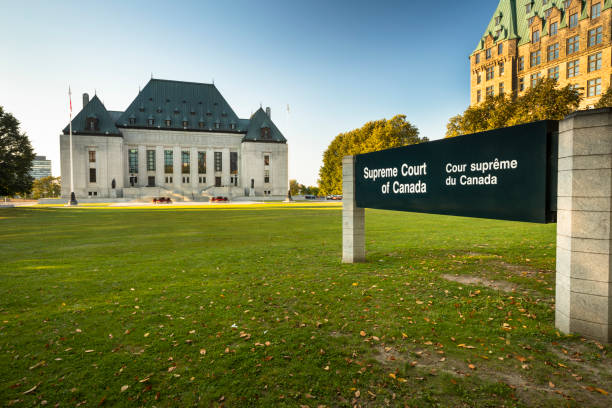
The Supreme Court of Canada (“SCC”) delivered its much-anticipated decision in Ahluwalia v Ahluwalia, 2026 SCC 16, where the Court was tasked with grappling whether a new tort of family violence should be recognized in Canada. Following from the teetering decisions of the Ontario Superior Court of Justice (“ONSC”) and the Ontario Court of Appeal (“ONCA”), the SCC held that the tort of intimate partner violence (“IPV”) is now recognized in Canada. Additionally, the SCC further took the opportunity to build on Nevsun Resources Ltd. v. Araya, 2020 SCC 5, and clarify the framework for determining when a new tort should be established in common law.
Although the SCC has taken a progressive step in recognizing the serious and harmful impacts of IPV, the decision raises important structural and procedural concerns that may, in practice, create additional barriers to compensation for victims. It is important to keep in mind that two things can be true: the law can acknowledge that IPV is a pervasive issue and a deeply harmful reality in Canada while still respecting the structural limits of private law adjudication. In this respect, the majority’s treatment of the adequacy of existing legal remedies does not fully consider the broader implications that expansion of tort liability, in this way, may affect the coherence of the law and the proper functioning of the judicial system as a whole.
FACTUAL BACKGROUND
The parties met through their families and married in India, back in November 1999. [1] The Respondent Father arrived in Canada in 2001 and the Appellant Mother and oldest child came afterward around 2002. [2] The parties bought their first home in Brampton in 2005, and later moved to Edmonton for the Respondent Father’s work. [3] While in Edmonton, the parties’ relationship became increasingly difficult and the Appellant Mother was diagnosed with Major Depressive Disorder and Moderate Anxious Distress. [4] Around the same time the Respondent had threatened divorce. [5] The Respondent Father moved back to Brampton in 2014 and the rest of the family later followed. [6] The spouses’ relationship began to break down to the point that they stopped directly communicating with one another and relied on messages relayed between the children. [7] In 2016, the parties separated. [8]
The proceedings amongst the parties began as an Application commenced by the Father in August 2016, regarding family law issues such as joint parental decision-making, weekend parenting time, sale of the matrimonial home and property equalization. [9] In responding to the Application, the Mother added a new claim for “general, exemplary and punitive damages for the physical and mental abuse suffered by the [Mother] at the hands of the [Father].” [10] At the time, the Appellant Mother did not plead the torts of assault, battery, or intentional infliction of emotional distress (“IIED”); rather, she claimed damages for physical and mental abuse, and the trial judge later raised the possibility of recognizing a new tort of family violence. [11]
THE ONSC DECISION
Justice Mandhane held that in order to understand the Mother’s claims for compensatory and aggravated damages, the relevant factual context would need to account for the entire 16-year pattern of emotional, mental and psychological abuse, coupled with an inherent breach of trust. [12] The 2021 reforms to the Divorce Act included a new definition of family violence that acknowledged the life long impact of family violence on children and families. [13] Based on its new statutory definition, Justice Mandhane stated that in order to frame liability on a civil standard, the plaintiff must establish:
Conduct by a family member towards the plaintiff, within the context of a family relationship, that:
1. Is violent or threatening; or
2. Constitutes a pattern of coercive and controlling behavior; or
3. Causes the plaintiff to fear for their own safety or that of another person.[14]
Ultimately, Justice Mandhane held that although there may be some overlap with existing torts, there are unique elements that justify the recognitions of a unique cause of action that are not fully captured by the existing torts. [15]
A new tort of family violence was created. The Mother was entitled to damages of $150,000 in relation to the family violence she experienced during the marriage. [16]
THE ONCA DECISION
The Court of Appeal [17] found that it was unnecessary for Justice Mandhane to create a novel tort. The Court reiterated the framework in Nevsun Resources, to highlight the three clear rules for when the courts will not recognize a new nominate tort:
The courts will not recognize a new tort:
1. Where there are adequate alternative remedies;
2. That does not reflect and address a wrong visited by one person upon another; and
3. Where the change wrought upon the legal system would be indeterminate or substantial.[18]
On its own, the existence of family violence does not justify the creation of a new tort. It is only appropriate where there is a harm that “cries out” for a legal remedy that does not exist. [19]
The Court of Appeal disagreed with Justice Mandhane, finding that the existing torts of battery, assault, and IIED covered what was being proposed as the new tort of family violence. [20] Furthermore, the tort of coercive control was proposed by the Mother in the alternative, but was also not recognized due to the already existing tort of IIED and the elimination of the requirement to establish visible and provable injuries and elimination of the requirement to prove harm. [21]
The ONCA allowed the appeal, in part. They reduced the award of damages to $100,000. [22] Neither the tort of family violence, nor coercive control, were recognized.
SUPREME COURT OF CANADA’S DECISION
The SCC rendered its decision on May 15, 2026. Almost exactly two years after granting leave.
A 6-3 majority recognized a new tort of intimate partner violence.
The SCC Clarifies When the Court Should Recognize a New Tort
Kasirer J. writing for the majority [23] clarified the framework for the recognition of new torts:
1. The facts must show a wrongful act that offends a recognized legal interest in private law;
2. The existing remedies must be inadequate; and
3. The novel tort must be a proper response[24]
Intimate Partner Violence Satisfies the New Tort Framework
1. Wrongful Act that Offends a Recognized Legal Interest in Private Law
Here, the courts must constrain their inquiry to the facts and the impugned conduct before them. [25] Prior to this decision, a plaintiff’s success in an IPV claim depended on whether the material facts pleaded could be addressed through existing torts. [26] Plaintiffs would often find themselves not neatly fitting into existing legal categories that are ill-suited to fully address their situation. [27] By creating a new tort that addresses a distinct wrong not addressed by existing torts, more victims are encouraged to take legal action to seek remedy for the injury suffered, as well as assist judges and lawyers in responding with the appropriate understanding and context. [28]
Labelling the new tort as IPV as opposed to family violence narrows the focus to conjugal unions of close personal connection, that brings with it an interdependence of two co-equals giving rise to expectations and obligations. [29] This intimacy, based on mutual dependency, creates a more susceptible environment to coercive control. [30] Likewise, Kasirer J. was careful to distinguish that the wrongful conduct presented to the trial judge was specific to the intimate partnerships, not all family relationships and that the Court would be mistaken to go beyond the scope of the pleadings and evidence. [31] Kasirer J. left the consideration of the impact of family violence on other family members for another day. [32]
The overall wrong is the collapse of a shared foundation between intimate partners that interferes with a partner’s dignity, autonomy and equality. The IPV is not confined to conduct that only inflicts physical or psychological injury but also coercive conduct that deprives a partner of their autonomy. [33]
2. Existing Torts Do Not Provide Adequate Remedies
The tort of IPV may include different forms of violence, including, physical, emotional or other methods of coercive control, that in its totality produces a different meaning and quality in the context of intimate partnerships. [34] While existing torts may overlap and capture discrete incidents or patterns of interference to one’s physical, psychological or emotional integrity, these torts do not account for the specific consequences that flow from coercive control in intimate partnerships either from a single act of violence or by patterns over time. [35] The SCC recognized that the Respondent Father’s coercive behaviour towards the Appellant Mother was broader in scope than physical and emotional abuse due to the cumulative effect of various forms of controlling conduct that left the Appellant subordinate to the Respondent. [36]
The majority held that existing torts, taken separately or together, cannot remedy the full scope of injury inflicted by IPV, particularly regarding coercive control. On its own, the tort of battery compensates for one’s physical autonomy, but not as an interest pertaining more generally to one’s agency and freedom to make one’s own decisions within an intimate partnership. [37] The tort of assault is an intentional act that causes one to reasonably apprehend imminent harmful physical contact that interferes with one’s psychological integrity and security. [38] The majority highlighted that coercive control instead encompasses a generalized fear of future harm, separate from the fear of imminent harm. [39] Finally, the tort of intentional infliction of emotional distress (“IIED”) was held to be unsuitable for methods of coercion that do not produce a visible and provable psychological illness. [40] The proof requirement of IIED would “risk treating the deprivation of an intimate partner’s autonomy in all cases of coercive control as insufficient, unless and until it overlapped with harm to one’s bodily and psychological integrity. This, in turn, would result in the victim’s loss of freedom — a most egregious harm — going unremedied.” [41]
The New Tort of IPV
Overall, the majority held that in view of the distinct wrong that may arise in intimate partnerships, it is appropriate to recognize a new tort of IPV. The new tort is meant to centre on coercive control, which undermines the victim’s dignity, autonomy, and equality, unlike violence that is directed at a stranger. [42] The tort of IPV may be manifested through a single violent act, discrete acts of violence or a pattern of abuse, where coercive and controlling conduct of one partner overpowers the will of the other. [43] In coming to this determination, the majority held that it is the specific intimate partnership context that enables the abuser to exert control over the victim. According to the SCC, this tort fills a gap in common law by properly recognizing that conduct objectively resulting in domination and control of an intimate partner is a “qualitatively distinct wrong from those wrongs redressable through existing torts.” [44] The interference with an intimate partner’s dignity, autonomy and equality constitutes the harm experienced by a victim of coercive control. [45]
The test for IPV is as follows:
The Plaintiff must establish three elements:
1. The abusive conduct arose in an intimate partnership or its aftermath;
2. The defendant intentionally engaged in that conduct; and
3. The conduct, on an objective measure, constitutes coercive control[46]
This new tort does not require the plaintiff to prove any consequential harm separately. [47] Upon establishing the three elements of the tort, the harm is necessarily present and liability follows. [48] The quantum of compensatory damages that may be awarded depends on the extent of the harm and the factual circumstances. [49]
Tort Claims in Family Law Proceedings
Tort claims and family law claims can be litigated together and with that comes the inevitable overlap of facts. In doing so, legal purposes must remain distinct. Where a claim involves both statutory and tort-based claims arising from family violence, it may be more beneficial for a judge to resolve the tort claim prior to proceeding with the statutory claims for a fulsome appreciation of the record and the facts. [50]
KARAKATSANIS J. CONCURRING:
Although Karakatsanis J. agreed with the majority’s decision of establishing a new tort of IPV, Karakatsanis disagreed with the third element of the test focusing on coercive control. Although such conduct is necessary to capture within this tort, she would not limit recovery under the tort of IPV to coercive control as it does not reflect the full lived realities of vulnerable survivors of IPV. [51]
CÔTÉ , ROWE, and JAMAL JJ. DISSENTING
Jamal J., writing for the dissent, disagreed with the recognition of a new tort where full compensation was already available under existing torts and cautioned that the new tort proposed by the majority will create significant complications for plaintiffs seeking compensation for IPV.[52] Notably, Jamal J. highlighted that the Appellant Mother initially brought a claim for $100,000 in damages for physical and mental abuse and the broader pattern of physical and emotional abuse suffered, and she received $100,000 under existing torts applied to her circumstances. [53] In that case, there was no basis to interfere with that result, and no facts had cried out for a remedy.
CONCLUSION
The majority described coercive control as conduct that “non-exhaustively includes tactics of isolation; manipulation; humiliation; surveillance; physical, psychological, sexual, and economic abuse; and intimidation that can control, isolate, and entrap intimate partners.” [54] Where coercive control exists, the victim is no longer their partner’s equal and is therefore deprived of the freedom to make their own choices. Therefore, once it is established that the defendant’s intentional conduct objectively constitutes coercive control, the resulting loss of autonomy of the plaintiff within the partnership follows, requiring no separate proof of harm. [55]
The overarching narrative that stands out from the majority’s reasons is that “recognizing the harms to dignity, autonomy, and equality caused by coercive control as compensable accords with corrective justice, the central animating principle underlying tort law acknowledged by this Court.” [56] There is growing recognition that the legal interest implicated by IPV is one that, at its core, interferes with an individual’s dignity, autonomy and equality, not fully captured by existing torts. [57] The majority has tried to fill a void that they claim has been left by existing torts that have proven to be insensitive to coercive control as a distinct wrong in intimate partnerships. [58]
TAKEAWAY
Ahluwalia alters the legal landscape by recognizing a standalone tort of IPV that deserves independent compensation for its unique harm to a partner’s dignity, autonomy and equality. This case introduces greater procedural and strategic complexity, as we may begin to see an increase in family law matters entering the tort law sphere to enforce civil accountability for domestic abuse, both physically, mentally, and emotionally. Although Ahluwalia presents a positive step forward in attempting to support victims of the pervasive issue of IPV in Canada, the dissenting commentary regarding the risk of the new tort complicating the path to recovery for victims of IPV, [59] cannot be ignored and should be considered further to better anticipate these real concerns for an already strained judicial system.
Footnotes
- Ahluwalia v Ahluwalia, 2026 SCC 16 (CanLII), at para 26. [Ahluwalia SCC Decision]
- Ahluwalia SCC Decision, at para 26.
- Ahluwalia SCC Decision, at para 27.
- Ahluwalia SCC Decision, at para 27.
- Ahluwalia SCC Decision, at para 27.
- Ahluwalia SCC Decision, at para 28.
- Ahluwalia SCC Decision, at para 28.
- Ahluwalia SCC Decision, at para 29.
- Ahluwalia SCC Decision, at para 29.
- Ahluwalia v Ahluwalia, 2022 ONSC 1303 (CanLII), at para 27. [Ahluwalia ONSC Decision].
- Ahluwalia ONSC Decision, at para 27.
- Ahluwalia ONSC Decision, at para 48.
- Ahluwalia ONSC Decision, at para 43; Divorce Act, RSC 1985, c 3 (2nd Supp), Part -1, s. 2(1).
- Ahluwalia ONSC Decision, at para 52.
- Ahluwalia ONSC Decision, at para 54.
- Justice Mandhane awarded the Mother $50,000 in compensatory damages, $50,000 in aggravated damages, and $50,000 in punitive damages. See Ahluwalia ONSC Decision, at paras 112–120.
- The three-panel bench consisted of Justice Benotto, Justice Trotter, and Justice Zarnett.
- Nevsun Resources Ltd. v. Araya, 2020 SCC 5 (CanLII), at para 237. [Nevsun Resources].
- Ahluwalia ONCA Decision, at para 47.
- Ahluwalia ONCA Decision, at para 71.
- Ahluwalia ONCA Decision, at para 106.
- The ONCA held that the trial judge, in error, failed to take a required step in the analysis of whether an award of punitive damages was warranted. Therefore, they reduced the damages by the $50,000 punitive damages award assigned by the Trial Judge. See Ahluwalia ONCA Decision, at paras 125–133.
- The majority consisted of: Wagner C.J, Kasirer, Martin, O’Bonsawin and Moreau JJ. Karakatsanis J., concurring. Côté , Rowe and Jamal JJ., dissenting.
- Ahluwalia SCC Decision, at para 95.
- Ahluwalia SCC Decision, at para 84.
- Ahluwalia SCC Decision, at para 88.
- Ahluwalia SCC Decision, at para 88.
- Ahluwalia SCC Decision, at para 88 and 90.
- Ahluwalia SCC Decision, at para 103–104.
- Ahluwalia SCC Decision, at para 106.
- Ahluwalia SCC Decision, at para 173.
- Ahluwalia SCC Decision, at para 173.
- Ahluwalia SCC Decision, at para 120.
- Ahluwalia SCC Decision, at para 140.
- Ahluwalia SCC Decision, at para 140.
- Ahluwalia SCC Decision, at para 142.
- Ahluwalia SCC Decision, at para 145.
- Ahluwalia SCC Decision, at para 146.
- Ahluwalia SCC Decision, at para 146–147.
- Ahluwalia SCC Decision, at para 155.
- Ahluwalia SCC Decision, at para 156.
- Ahluwalia SCC Decision, at para 181.
- Ahluwalia SCC Decision, at para 181.
- Ahluwalia SCC Decision, at para 182.
- Ahluwalia SCC Decision, at para 184.
- Ahluwalia SCC Decision, at para 184.
- Ahluwalia SCC Decision, at para 184.
- Ahluwalia SCC Decision, at para 184.
- Ahluwalia SCC Decision, at para 184.
- Ahluwalia SCC Decision, at para 220.
- Ahluwalia SCC Decision, at para 254.
- Ahluwalia SCC Decision, at para 300.
- Ahluwalia SCC Decision, at paras 337, and 398.
- Ahluwalia SCC Decision, at para 190.
- Ahluwalia SCC Decision, at para 199.
- Ahluwalia SCC Decision, at para 136, citing Clements, at para 32
- Ahluwalia SCC Decision, at para 179.
- Ahluwalia SCC Decision, at para 204.
- Ahluwalia SCC Decision, at para 383-397.